
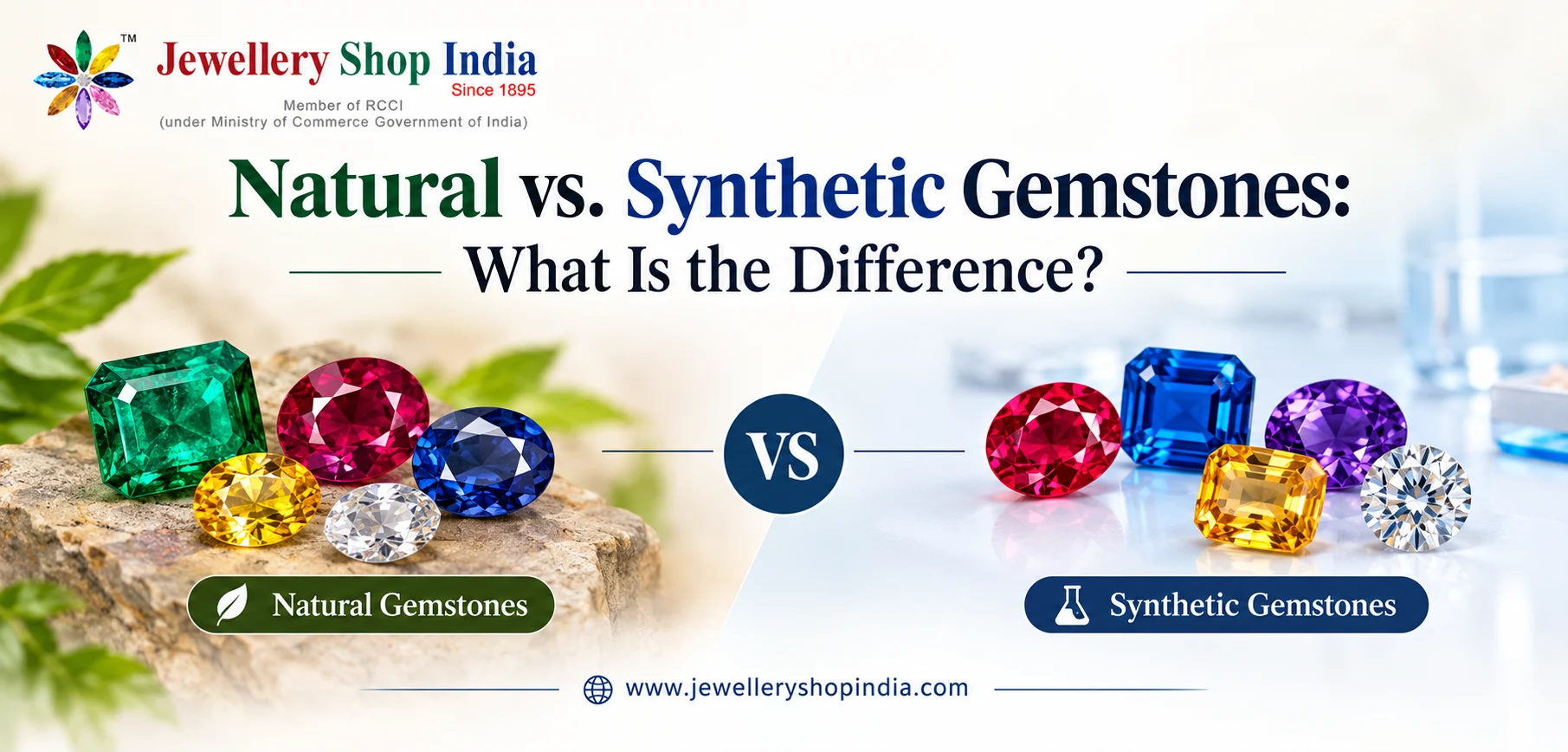
Gemstones possess great value on account of their beauty, scarcity, color, and unique characteristics. However, not all the gemstones that exist in the market can be regarded as natural gemstones. Natural gemstones take thousands or even millions of years to form, while artificial gemstones are manufactured in laboratories, possessing almost similar properties as natural gemstones. It is essential to know the difference between natural and synthetic gemstones to enable a buyer to make an intelligent decision, particularly in purchasing gemstones for jewelry, collection, and astrological uses.
What Are Natural Gemstones?
Natural stones refer to those stones that form naturally in the earth's crust and which are not made artificially in laboratories. Natural stones may be either inorganic or organic stones formed under specific geological conditions. Some of the natural stones include natural blue sapphire stone, emerald, ruby, and other Indian gemstones. Every single natural stone will have its own inclusions and color, among other features that make it different from other stones of the same category. Astrology stones are other kinds of stones that are usually selected based on astrological practices.
What Are Synthetic Gemstones?
Synthetic gemstones are man-made in labs following controlled methods of production. Such stones may possess the same chemical makeup, crystal structure, and appearance as those in nature. For instance, synthetic sapphire may be produced in a lab resembling naturally occurring sapphire. Despite the aesthetic beauty and clarity offered by synthetic stones, their method of production is dissimilar to that of natural stones. It is vital to note that synthetic does not imply fake. Synthetic gemstones are lab-grown stones, whereas imitations may only mimic the appearance of a gemstone without possessing its composition or structure.
Natural vs Synthetic Gemstones
| Feature | Natural Gemstones | Synthetic Gemstones |
|---|---|---|
| Origin | Formed naturally in the Earth | Created in a laboratory |
| Formation | Takes a long geological period | Produced under controlled conditions |
| Appearance | May contain natural inclusions and variations | Often offers greater consistency |
| Rarity | Some varieties are naturally rare | Generally easier to produce |
| Value | Can have higher value depending on quality and rarity | Usually more affordable |
| Availability | Depends on natural supply | Can be produced in larger quantities |
| Certification | Can be tested for origin and treatments | Can be identified through gemological testing |
How can you identify a natural gemstone?
It may not be easy to identify whether the gemstone is natural just through its physical appearance since even natural gemstones, like Best Emerald stone, natural yellow sapphire stone, have inclusions and other elements inside them. It is better to get a gemological certificate that will give information on the gemstone itself, the country of origin when known, and any treatments made to it. It is advisable to buy a gemstone from an experienced vendor. This is especially true when there is a comparison of prices for expensive gemstones, as there are various factors that determine the price of a gemstone.
Natural Gemstones for Jewelry and Astrology
Natural stones can be worn in various forms of gemstone jewelry, such as rings, pendants, bracelets, and earrings. These natural gemstones can even be purchased as loose stones and gemstone beads for use in making jewelry and spiritually. Various gemstones are traditionally known to have different beliefs related to astrology. The yellow sapphire stone, blue sapphire, emerald, and various Navratna stones are some examples of astrological stones often used in making gemstone jewelry. Some other popular types of stones are opal stone, Sulemani aqeeq stone, citrine stone (topaz), amethyst stone, sunstone gemstone, and tiger’s eye stone.
Which one is the Right One for You?
The decision of whether to choose a natural or a synthetic gemstone lies in the objective, budget, and individual preference of the buyer. In case rarity, natural occurrence, and traditional value hold significance for the buyer, he may prefer to choose the natural gemstone. In case appearance and price are the key considerations, synthetic gemstone serves as an alternative option. In addition, buyers who follow astrology need to pay heed to the traditional requirements of the gemstone instead of appearance only. Before buying gemstone online in India, it would be advisable to verify the stone specifications, certification, treatment process, and return policy of the seller. Before you buy gemstone online in India, it is advisable to verify the stone specifications, certification, treatment process, and return policy of the seller to ensure a reliable purchase.